
Zirconium Crowns vs Porcelain Veneers: Which Is Better for You?

Choosing between zirconia (zirconium) crowns and porcelain veneers is not really a “which looks better” question. It is a decision about tooth structure, bite forces, how much preparation is needed, and how long you want your result to stay stable with realistic maintenance. In this guide, we’ll compare zirconium crowns vs porcelain veneers in plain language, explain when each option is usually recommended (cracked teeth, large fillings, staining, gaps, mild misalignment, root canal teeth), and walk you through the typical Turkey workflow (scan, CAD/CAM, temporaries, bonding/cementation). We’ll also cover durability, bruxism risk, staining, and lifespan expectations so you can choose the right path for your smile makeover.
Zirconia vs. Porcelain Veneers
Let’s define the core difference simply.
- A crown is a “cap” that covers most or all of the tooth above the gumline to restore strength and function.
- A porcelain veneer is a thin ceramic shell bonded mainly to the front surface of a tooth to improve color, shape, and minor defects while preserving more natural structure.
This matters because preparation is permanent. A classic all-ceramic full crown prep removes substantially more tooth structure than a veneer prep in many cases. One JADA review summarizes this difference clearly by noting that full crown preparations remove a much larger portion of tooth structure compared with veneers.
If you are deciding for front teeth, the right choice often depends on whether your tooth is mostly healthy (veneers) or structurally compromised (crowns).
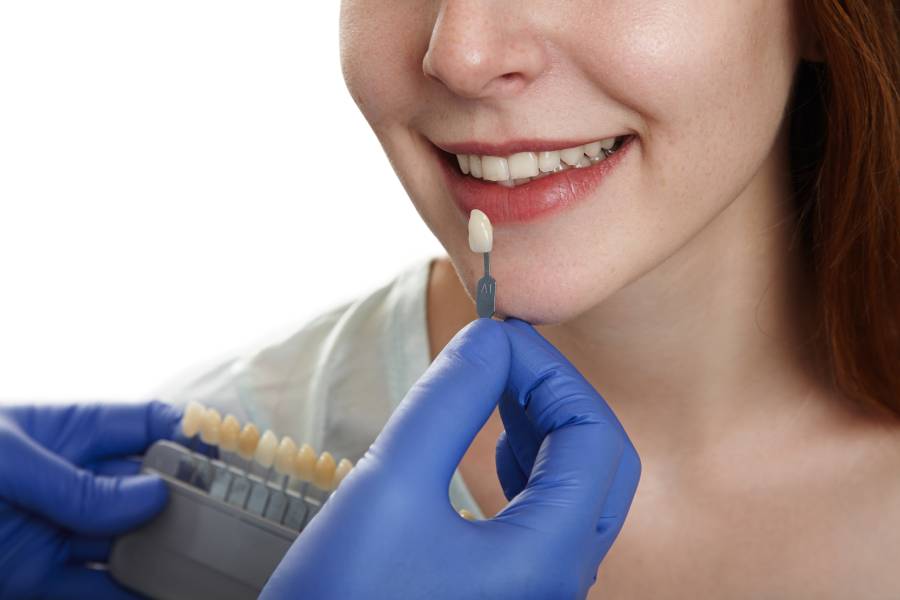
Zirconium and Porcelain Veneer Procedure in Turkey
In Turkey, many cosmetic dentistry clinics run these treatments with a streamlined process that suits international patients. The safe version of “fast” is not skipping steps. It is using digital workflows to make planning and fit more consistent.
A typical pathway includes:
- Consultation and smile planning. We review your goals and your bite, then map what can be achieved with veneers vs crowns.
- Digital scan or impressions. Many clinics use an intraoral scanner and CAD/CAM planning for ceramic work.
- Tooth preparation and temporaries. Temporary crowns or temporary veneers protect the teeth while the lab work is produced.
- Try-in, shade matching, and bite adjustment. This step is where “natural looking” is built, especially in the front zone.
- Final bonding or cementation. Veneers rely heavily on bonding protocols, while crowns can be cemented depending on the material and case design.
A “quick smile makeover” still needs proper bite evaluation. If your occlusion is ignored, even beautiful ceramics can chip or debond earlier than expected.
What Is Full Mouth Restoration?
Full mouth restoration means rebuilding multiple teeth across the mouth to restore function, bite stability, and aesthetics. It can include crowns, veneers, onlays, and sometimes implant-supported work depending on the situation.
In real life, full mouth restoration is usually recommended when you have one or more of these patterns:
- Worn teeth (attrition) that changed your bite height.
- Multiple old restorations and large fillings with recurring fractures or leakage.
- Significant discoloration combined with shape problems across many teeth.
- Bruxism-related damage that needs stronger coverage in several areas.
This is where “crowns vs veneers” becomes a design decision. You might use veneers where enamel is strong and the goal is cosmetic refinement, then use crowns where the tooth needs reinforcement.
Which Is The Better Option?
The better option is the one that matches your tooth’s risk level.
If your tooth is mostly healthy and the issue is cosmetic (staining, small chips, mild shape issues), veneers often fit the logic of minimal invasiveness.
If your tooth is weakened (cracks, large fillings, heavy bite forces, root canal treated tooth), crowns often provide the coverage and protection that veneers cannot.
Before we list “who should choose what,” here is a helpful way to think:
You are not choosing a material. You are choosing a structural strategy for your tooth.
Zirconia Crowns in Turkey
Zirconia crowns are ceramic crowns known for high strength. You may hear two common types:
Monolithic zirconia: a single-piece zirconia crown designed for strength and fracture resistance.
Layered zirconia: zirconia core with porcelain layering to enhance translucency and aesthetics in the front zone.
Modern studies and reviews often highlight the strong fracture resistance of monolithic zirconia crowns, while also noting that material behavior depends on formulation and processing.
If you grind your teeth or you have a tooth that needs serious reinforcement, zirconia crowns can be part of a conservative long-term plan, especially when the bite is managed properly.
Porcelain Veneers in Turkey
Porcelain veneers are a popular option for front teeth because they can deliver a natural “tooth-like” appearance through translucency and careful shade matching. Cleveland Clinic explains veneers as shells that cover the front surfaces to hide chips, stains, and cosmetic imperfections.
Veneers also have strong long-term data when case selection and bonding are done well. Large systematic reviews report high survival rates around the 10-year mark for porcelain laminate veneers, with survival decreasing gradually over longer follow-up periods.
Veneers perform best when bonding is primarily to enamel and when bite forces are controlled, especially in patients with bruxism tendencies.
How Is Zirconia Crown Treatment Performed?
A zirconia crown is usually planned as a strength-focused restoration. The steps are straightforward but detail-heavy:
First, we assess the tooth and your bite. If the tooth has a crack, a large filling, or has been root canal treated, the goal is to protect remaining tooth structure while restoring proper occlusion.
Then the tooth is prepared so the crown can fit with stable margins near the gum line. After scanning or impressions, the crown is designed with CAD/CAM and milled, then finished and cemented or bonded depending on the case and materials used.
For front teeth, aesthetics depend on more than “white color.” It’s about translucency, surface texture, and how the crown edge meets the gum line.
Difference Between Zirconia Crowns vs Porcelain Veneers
This is the section most people search for when they type crown vs veneer which is better. The honest answer is that they solve different problems.
Before we bullet it, here is the simple rule:
Veneers improve appearance when the tooth is strong. Crowns protect and rebuild when the tooth is weak.
Key differences that typically decide the plan:
Tooth reduction: Crowns generally require more reduction than veneers, which often preserve more natural structure.
Best use cases: Veneers are mainly cosmetic for front surfaces. Crowns are cosmetic and restorative, often used after fractures, large fillings, or root canal treatment.
Strength: Zirconia crowns are designed for higher fracture resistance. Veneers can chip or debond under high forces, especially if bite issues are not managed.
Bruxism risk: Bruxism is a known risk factor for veneer complications and survival in clinical studies. For many grinders, crowns or strong protective planning plus night guard becomes important.
Aesthetics: Veneers can look extremely natural. Zirconia can also look natural, especially layered zirconia or high-translucency systems, but aesthetic success depends on design and finishing.
How Are Zirconium and Porcelain Veneers Made?
Most modern clinics produce ceramic work using a mix of lab craftsmanship and digital precision.
Zirconia crowns are commonly CAD/CAM designed and milled from zirconia blocks, then sintered and finished.
Porcelain veneers can be fabricated as porcelain laminate restorations designed to mimic enamel-like translucency and surface texture.
The “natural look” comes less from the brand of material and more from how the dentist and lab handle shade layering, surface morphology, and how the restoration integrates with the gum line.
How To Care For Zirconium and Porcelain Dental Veneers
Care is often what separates “it looked great on day one” from “it still looks great years later.”
First, the basics are the same for both: gentle brushing, daily flossing, and regular checkups. After that, your habits matter.
Here are practical care rules that protect both veneers and crowns:
- Avoid using your teeth as tools for opening packages or biting hard objects.
- If you grind your teeth, wear a night guard because force management protects ceramics and bonding.
- Keep your gum line healthy because gum inflammation and recession can expose margins and affect aesthetics.
- Schedule bite checks if you notice chipping, sensitivity, or a “high spot” feeling after treatment.
Stain resistance is usually better with ceramics than composites, but the edges and cement line still benefit from good hygiene and professional polishing when needed.
What Is The Lifespan Of Porcelain and Zirconium Veneers?
Lifespan is not only a material question. It is a combination of case selection, bite forces, bonding/cementation quality, and your habits.
For porcelain laminate veneers, systematic reviews report strong survival at around 10 years, with gradual decline at 15–20 years depending on study conditions and definitions of failure.
For zirconia crowns, research frequently emphasizes high fracture resistance of monolithic zirconia crowns under testing and clinical evaluations of zirconia systems continue to evolve with material formulations.
Bruxism is repeatedly associated with higher complication or failure risk for veneers in the clinical literature. If you grind, we usually plan more conservatively and focus on protection.
Which Crown Material Is Right For You?
If you are comparing zirconium crowns vs porcelain veneers for a Hollywood-smile style makeover, we suggest you decide in this order:
- Tooth health and structure. If you have cracks, big restorations, or a root canal tooth, you often need crown-level protection.
- Enamel availability. Veneers bond best when enamel is present and the tooth is not structurally compromised.
- Bite and bruxism. Grinding changes everything because it increases fracture and debonding risk.
- Aesthetic goals. Veneers can be extremely natural. Zirconia can also be beautiful, especially when layered or designed for anterior aesthetics.
- Timeline and number of teeth. “How many veneers do I need” depends on your smile line, tooth display, and whether you want to change only the front 6–10 teeth or more.
If you enjoy reading deeper, patient-friendly planning content similar to what you might see on hospital education pages such as the Turkey Cares Blog, you’ll recognize the same principle here: the safest cosmetic dentistry is always built on diagnosis first, then design.
So, crowns vs veneers is not a beauty contest. It is a match between your tooth’s condition and the restoration’s job. Porcelain veneers are often ideal when you want a natural-looking improvement for front teeth that are healthy and strong. Zirconia crowns usually make more sense when you need structural protection for cracked teeth, heavily filled teeth, or teeth that have had root canal treatment, especially if you have strong bite forces or bruxism.
If you want to keep exploring smile makeover topics in a calm, educational way, you can browse the Turkey Cares Blog. When you’re ready to ask case-specific questions and plan a consultation visit, you can use this address line in your scheduling notes: Turkey Cares Contact
 CALL US
 WHATSAPP