
Which Intraocular Lens to Choose: Monofocal vs Multifocal

Choosing between a monofocal vs multifocal intraocular lens can feel like the most important decision in cataract surgery planning. Many people want clear distance vision, fewer glasses and confidence about night driving and reading. At the same time, lens choice is not one-size-fits-all because your eye health, lifestyle and visual priorities can influence how satisfied you feel afterward. This guide explains the practical differences between monofocal and multifocal IOLs, what the selection process typically looks like and which trade-offs surgeons often discuss. Turkey Cares supports international patients by helping them navigate consultations, diagnostics and coordination in a structured way so they can ask the right questions and understand realistic expectations.
The Lens Options
During cataract surgery, the eye’s natural lens is replaced with an artificial intraocular lens called an IOL. A monofocal vs multifocal IOL comparison is mainly about how many focal points the lens provides and what that means for glasses dependence.
Monofocal IOLs are designed to focus clearly at one main distance, most often distance vision. Many people still need reading glasses for near work after surgery. Multifocal or trifocal IOLs are considered premium designs that aim to provide a wider range of vision such as distance, intermediate and near. This wider range can come with a higher chance of visual phenomena like halos or glare in some patients.
How Does the Process Work?
If you are asking “which intraocular lens should I choose” it helps to understand how the decision is usually made from evaluation to aftercare.
Initial evaluation
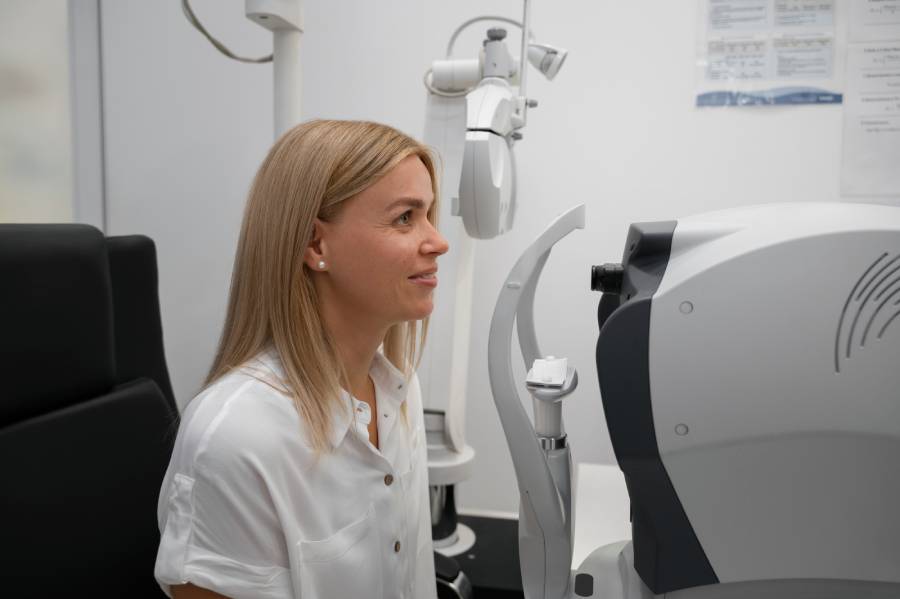
Your clinic performs a detailed eye assessment and measurements to plan lens power and check overall ocular health. This stage may also include reviewing dry eye symptoms and any history of glaucoma, macular issues or previous laser vision correction. These factors can influence which lens types are considered suitable.
Surgeon consultation
Your surgeon discusses daily needs such as reading, computer work and night driving. This is also when you review the real-world trade-offs in a monofocal vs multifocal intraocular lens choice such as contrast sensitivity, glare tolerance and your willingness to use glasses sometimes.
Procedure phase
Cataract surgery itself is typically a short procedure where the cloudy lens is removed and the chosen IOL is implanted. Your surgeon may also discuss add-on options like a toric lens if astigmatism correction is relevant.
Recovery period
Vision often improves in the early weeks but stability can vary by person and lens type. You may be advised to use prescribed drops and follow activity guidance based on your surgeon’s protocol. Multifocal designs may require an adaptation period as the brain learns the new optics.
Follow-up and aftercare
Follow-ups confirm healing, refractive outcome and satisfaction with the visual range. If symptoms like halos or glare occur, the clinic can assess contributing factors such as dry eye or residual refractive error and discuss management options.
Monofocal IOL vs Multifocal IOL Differences
A clear way to compare options is to look at the most common “wins” and “trade-offs” that affect daily life.
Monofocal IOLs: strengths and limitations
Monofocal lenses often provide crisp vision at the chosen focal distance, most commonly distance. Many patients still rely on reading glasses for near tasks. Some people choose a strategy called monovision with monofocal IOLs where one eye is set for distance and the other for near or intermediate. This can reduce glasses dependence for some patients but it still involves compromise and needs careful evaluation.
Multifocal and trifocal IOLs: strengths and limitations
Multifocal or trifocal designs aim to reduce spectacle dependence by splitting light into multiple focal points. Evidence reviews report that people with multifocal lenses may be more likely to experience halos and glare compared with monofocal lenses.
Some AAO-published summaries also note that distance contrast sensitivity and glare-related performance can be worse with multifocal designs in certain comparisons.
Benefits and Realistic Expectations
A monofocal vs multifocal IOL decision is about matching your priorities to predictable trade-offs. If your top priority is sharp distance vision and you do not mind reading glasses, monofocal lenses can be a straightforward option. If your priority is reducing glasses use across more distances, multifocal or trifocal lenses may be discussed as a possibility.
It is important to keep expectations realistic. Multifocal lenses can improve near vision compared with monofocals for many people but whether that benefit outweighs side effects varies by patient motivation and visual tolerance. Results can also vary based on ocular surface health, residual astigmatism and individual adaptation.
What About EDOF and Toric Lenses?
Some patients want an alternative that balances range of vision with fewer night-vision disturbances. EDOF lenses aim to extend the range of focus, often emphasizing distance and intermediate. They are sometimes considered between monofocal and multifocal options depending on the design and your goals.
If you have astigmatism, toric IOLs can be used with monofocal and sometimes with premium lens designs depending on clinical suitability. The key point is that astigmatism management is part of choosing the “best” lens for your visual plan, not a separate decision.
Advantages of Having Cataract Lens Selection in Turkey
International patients often value a process that is structured and easy to navigate. In Turkey, cataract evaluation and lens planning can be organized within a clear clinical pathway when supported by modern diagnostics and experienced refractive teams.
Turkey Cares focuses on coordination rather than promises. The aim is to help patients access a consultation model that includes comprehensive testing, clear surgeon communication and a practical travel plan that supports follow-ups. Many patients also appreciate a well-managed medical tourism experience that covers scheduling, transfers and multilingual guidance without feeling rushed.
For related, up-to-date guides on planning surgery and understanding recovery timelines, you can explore the Turkey Cares Blog. If you want a preliminary online consultation focused on natural-looking results and a plan tailored to your body, you can reach out through Turkey Cares Contact.

 CALL US
 WHATSAPP