
How Natural Can Breast Augmentation Look?
Breast augmentation is often pictured as a dramatic “before and after,” but, today’s most requested outcomes are usually the opposite: soft curves, balanced proportions, and a result that looks like it could be yours naturally. If you’re asking how natural can breast augmentation look, you’re likely also wondering what makes implants look “fake,” how to choose the best implant style for a natural appearance, and how long it takes for the final look to settle.
In this up-to-date, hospital-led guide by Turkey Cares, we explain what “natural-looking breast augmentation” really means in clinical terms, and how surgeons plan implant size, shape, and placement to match your body. We also cover alternative options, like fat transfer or hybrid augmentation, and the timelines you should expect as swelling reduces and the implants settle.
- We explain what creates natural breast augmentation results, including implant selection and surgical technique.
- We show why some boob jobs look more “done,” and how to avoid that outcome.
- We outline realistic timelines, like swelling and “drop and fluff,” so you know when results look most natural.
- We help first-time international patients understand a safe, structured, hospital-led process.
What Are The Most Natural-Looking Breast Implants?
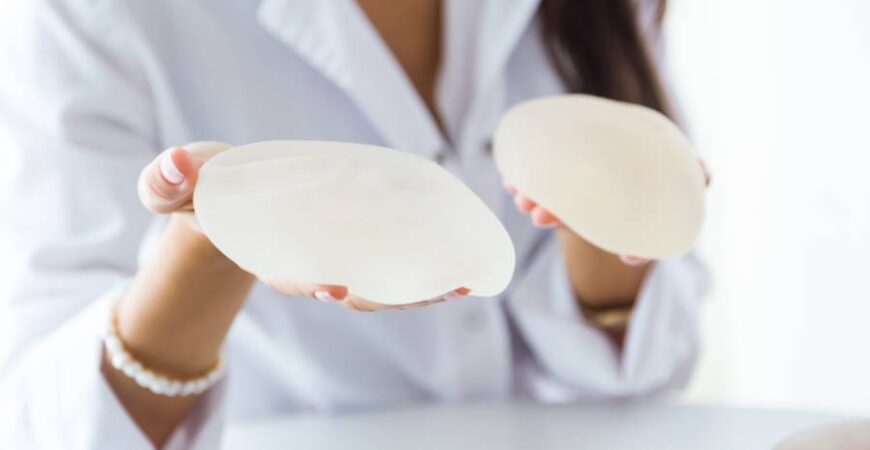
Natural-looking breast implants are not defined by one brand or one shape. They are chosen by matching implant dimensions to your anatomy, and by planning pocket placement and projection carefully. Most patients find that silicone gel implants, especially cohesive gel or “gummy bear” implants, feel and move more like natural breast tissue than saline in many cases, but, the “best” choice depends on your body and goals.
The most natural-looking result often comes from the right size for your base width and tissue, not from chasing a specific implant label.
- Silicone gel implants are often chosen for a softer feel and a more natural movement in many patients.
- Cohesive gel “gummy bear” implants can hold shape well, and may reduce some visible wrinkling in certain cases.
- Round implants can look very natural when sized correctly and placed with the right technique, especially in moderate profiles.
- Anatomical or teardrop implants are sometimes discussed for a natural slope, but, shape choice should be individualized and explained clearly.
- Implant profile, like low, moderate, or high, affects projection, and moderate profiles are commonly used for a subtle look.
- Implant diameter, base width, and volume (cc) must fit your chest wall anatomy, because mismatch can create an obvious “implant edge.”
Why Might A Boob Job Look More Fake?
A breast augmentation can look less natural when the implant is too large for the frame, when the pocket placement is not well matched to tissue thickness, or when the breast has little natural coverage. The “fake” look is usually not a single mistake, it’s a combination of sizing and anatomy that was not respected.
If you want a natural appearance, your plan should start with your base width and proportions, not only a cc number.
- Implants that are too large for your chest base width can look overly round, wide, or high.
- Very high profile implants can create a more “projected” appearance that may not suit petite frames.
- Thin breast tissue can make implant visibility or rippling more noticeable, especially with certain placements.
- Subglandular placement, meaning over the muscle, can look less natural in very thin patients, because there is less soft tissue coverage.
- Implant malposition, like bottoming out or double bubble deformity, can distort shape over time.
- Capsular contracture, which is tightening around the implant, can make the breast look firm, round, and less natural.

Better Surgical Techniques For A More Natural Look
Natural breast augmentation results are often created through technique as much as implant choice. A careful surgeon evaluates your tissue thickness, skin elasticity, nipple position, and any breast ptosis, meaning sagging, to decide whether you need an implant alone or an implant plus a breast lift. In a hospital-led process, this planning is supported by pre-op assessment and structured aftercare.
Natural results are not only “how it looks on day one.” They depend on healing, implant settling, and stable pocket support.
- Dual plane technique can help balance natural upper pole softness with good lower pole fullness in many patients.
- Submuscular placement, under the muscle, can create a smoother transition in thin patients by adding coverage.
- Pocket dissection must be precise to prevent implant malposition and support symmetry.
- Capsulorrhaphy and related pocket-control techniques may be used in revisions to correct shape and position issues.
- Incision placement, like inframammary, can support accuracy and control, but scarring should be discussed openly and realistically.
- A sizing session using implant sizers or 3D simulation can help you choose proportions, not just volume.
- If you have sagging, augmentation mastopexy, meaning breast lift with implants, can look more natural than “oversizing” to fill loose skin.
Choose A Size That Fits Your Frame And Proportions
If you want natural-looking breast augmentation, sizing is the heart of the plan. The goal is a breast that fits your shoulders, waist, and chest wall, and moves naturally with your posture. Many patients ask, “How many cc should I get,” but, cc alone is not enough. Two implants with the same cc can look different depending on diameter and profile.
Ask your surgeon to explain base width versus cc, because a natural look usually follows your anatomy.
- Base width is the measurement across your breast footprint, and it guides implant diameter selection.
- Implant profile changes projection, so a moderate profile often supports a soft, proportional contour.
- Tissue thickness influences how visible the implant edges may be, especially in thin patients.
- Skin elasticity matters, because tight skin can look “high and firm” at first, but settles over time.
- Your BMI and overall body proportions should guide the final decision, not only an aesthetic trend.
- If you want minimal cleavage change, your surgeon should plan implant spacing and pocket position carefully.
Are There Any Natural Alternatives To Breast Implants?
Yes, there are alternatives, but each comes with trade-offs. Fat transfer to the breast can create a softer, subtle enhancement using your own tissue. However, the increase is usually more modest than implants, and not all transferred fat survives long-term. Some patients choose a hybrid approach, combining a smaller implant with fat grafting for gentle edges and a more natural contour.
Natural should also mean safe. Procedures should be chosen based on your anatomy and medical suitability, not only preference.
- Fat transfer can be a natural option for mild volume increase and contour refinement.
- Fat grafting results can vary, because a percentage of fat may reabsorb over time.
- Hybrid breast augmentation, implant plus fat transfer, can soften transitions and help thin patients reduce implant visibility.
- If you have significant sagging, a breast lift may be a more natural-looking solution than adding more volume alone.
- Non-surgical methods cannot create the same structural change as surgery, so be cautious about unrealistic promises.
Can I Get A Boob Job Without Implants?
You can, in certain cases. A “boob job without implants” usually means fat transfer, a breast lift, or both. A lift reshapes and elevates the breast, but it does not add significant volume by itself. Fat transfer can add some volume, but it may require enough donor fat and realistic expectations. The safest plan is the one that matches your anatomy and your definition of natural.
If you want a fuller look but fear a “fake” result, a smaller implant or hybrid approach may offer a middle path.
- Fat transfer is best for patients who want a subtle increase and have available donor fat.
- A breast lift is often ideal when ptosis is the main issue, even if you choose implants later.
- Hybrid augmentation can provide a natural slope while keeping implant size conservative.
- Your surgeon should explain pros and cons clearly, including revision risk and long-term maintenance.
Who Is Choosing The Natural Look?
The natural look is especially popular among first-time patients, professionals who want subtle changes, and patients with petite frames who want proportion rather than volume. Many people now ask for results that look “unremarkable” to strangers, but meaningful to them. That preference influences implant selection, surgical technique, and even scar planning.
Social media trends change quickly, but your implants are long-term. Choosing proportions that suit you is usually the most timeless option.
- Petite or slim patients often prefer moderate projection and careful pocket placement to avoid implant visibility.
- Patients with asymmetry may prioritize balance over size, because symmetry is a big part of “natural.”
- Patients after pregnancy may choose breast lift with implants for a natural shape, not oversized volume.
- Patients who are active may discuss placement and implant feel during movement as part of planning.
- Patients who want subtle “before and after natural” changes often choose conservative sizing and softer profiles.
When Do Breast Implants Look Natural After Surgery?
Even the best-planned augmentation can look “high, firm, or swollen” at first. That does not mean the result will stay that way. Your breasts need time to heal, swelling needs to reduce, and implants need to settle into the pocket. This is commonly called the “drop and fluff” period, where implants gradually settle lower and the shape softens.
Your exact timeline depends on your body, implant type, and placement, like under the muscle versus over the muscle.
- Early swelling and tightness are common, especially with submuscular placement.
- Over weeks, implants settle, and the upper pole often looks less “full and round.”
- Bruising typically improves earlier than swelling, but both can vary between patients.
- A supportive bra and post-op instructions help guide healing and comfort.
- If you notice sudden shape changes, severe pain, or firm hardening, you should contact your surgical team promptly.
Natural Breast Augmentation Turkey
If you are considering natural breast augmentation Turkey, the most important step is choosing a structured, hospital-led process that treats your surgery as real medicine. At Turkey Cares, we focus on careful pre-op assessment, surgeon-led planning, safe anesthesia standards, and clear aftercare. We also support international patients with coordinated logistics, so you can focus on recovery rather than navigating details alone.
A safe clinic welcomes questions about implant type, sizing logic, placement choices, and revision planning, because transparency builds trust.
- We evaluate tissue thickness, skin elasticity, nipple position, and chest anatomy to plan proportions that look natural.
- We guide implant selection by base width and profile, not only by cc preferences.
- We explain placement options, like dual plane or submuscular techniques, based on natural appearance and tissue coverage.
- We plan follow-up and aftercare clearly, because long-term results depend on healing support.
For related, up-to-date guides on planning surgery and understanding recovery timelines, you can explore the Turkey Cares Blog. If you want a preliminary online consultation focused on natural-looking results and a plan tailored to your body, you can reach out through Turkey Cares Contact.
- Natural results come from anatomy-led sizing, careful technique, and patient healing time.
- Avoid “one-size” plans, because natural-looking breast augmentation is highly individualized.
- Ask about timelines and red flags, because early swelling can be normal but certain changes need quick attention.
- Choose a team that treats your surgery with medical seriousness, because safety and aesthetics belong together.

 CALL US
 WHATSAPP